Self-Driving for the Long Haul
After years of development, fully autonomous trucks will begin commercial service later this year. Are motorists ready to share the road with robot truckers?
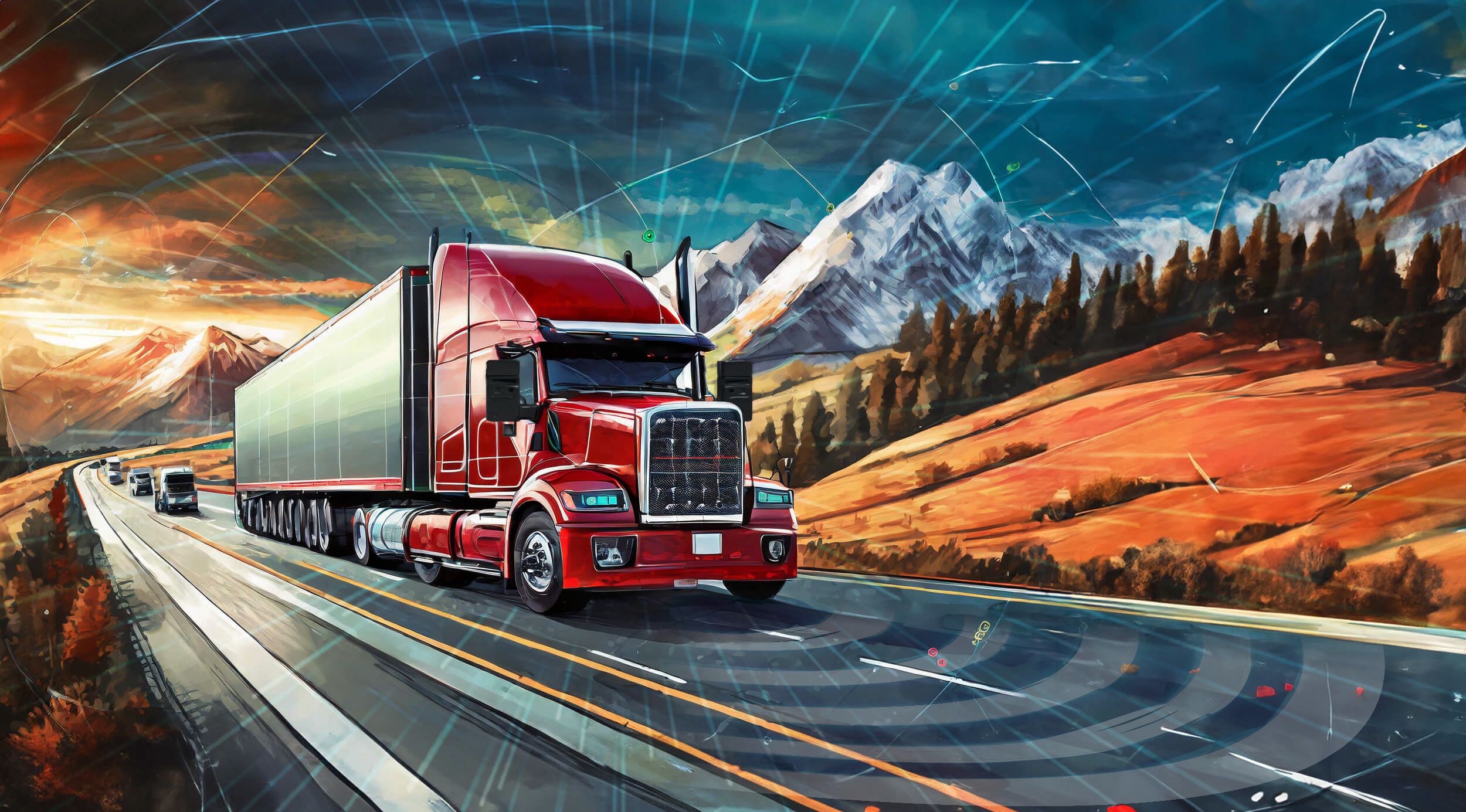

Modern technology has led to all sorts of distracted driving. For nearly 20 years, authorities have been warning about the dangers of talking on the phone or texting while driving, but improvements in mobile devices can tempt drivers into watching movies or playing video games when they should be paying attention to the road. The promise of Tesla’s self-driving Autopilot feature has lulled some drivers into napping behind the wheel. And after the introduction of the Apple Vision Pro in January 2024, videos of cars being driven by motorists wearing virtual reality goggles have flooded social media.
Later in 2024, however, there may be an even more distracting sight on stretches of interstate highways in Texas. Kodiak Robotics, a technology company in Mountain View, Calif., plans to deploy technology that will enable semi-tractor trailer trucks to haul freight with no person in the driver seat. Instead, the truck will be driven by an onboard computer fed data from dozens of sensors mounted on the cab and from special instrument modules that take the place of the sideview mirrors.
The company has been testing trucks for five years, though with safety drivers monitoring the performance. "Over the course of 2.5 million miles, we've successfully demonstrated that our self-driving trucks can withstand the harsh environment of long-haul trucking from both a platform integrity and a software perspective,” said Kodiak CEO Don Burnette at an announcement at the annual Consumer Electronics Show in January 2024.
Now the company believes its technology can operate trucks for hundreds of miles between freight depots with no driver at all. The company plans to begin deliveries between Dallas and Houston in partnership with Ryder later this year.
In the mid-2010s, self-driving technology was hailed as all but ready to take over the streets. Companies such as Google, Tesla, and Uber made bold claims about the near-term capabilities of their systems, and robotic taxi services (which included onboard relief drivers for when the self-driving mechanism became stymied) were rolled out in a limited number of towns to collect real-world data.
In recent years, vehicle autonomy has been seen as a more difficult problem than anticipated, with some high-profile failures, such as the suspension of the driverless taxi program offered in San Francsico by Cruise, a maker of self-driving car technology. As yet, no passenger automobile is capable of driving itself from coast to coast without human intervention and the business case for robotaxis is still tenuous.
For autonomous freight-hauling trucks, the demand from logistics companies looking to improve safety and on-time delivery has intersected with technology capable of navigating a defined set of limited-access highways from one cargo depot to another.
But for all the money and attention the technology is receiving, change won’t come overnight. “The highly automated revolution that we’ve been promised on our roads is more of an evolution over decades,” said Bryan Reimer, a research scientist in the MIT Center for Transportation and Logistics and the associate director of the New England University Transportation Center at MIT.
“What most people don’t realize is that the aviation industry tried what the automotive industry is trying now in the early 1980s—figured out it didn’t work,” Reimer said. “That’s why we still see pilots in most airplanes, and even when there are no pilots in the air in drones, there are teams of pilots on the ground.”


“All of these companies are increasingly facing investment headwinds,"
Kodiak isn’t the only company testing trucks on public highways. In February 2022, IVECO and Plus announced the start of public road testing of their jointly developed next generation highly automated trucks in Germany. The companies hope data will validate operations and potentially lead to the start of designing factory production.
In November 2022, Dutch research organization Netherlands Organization for Applied Scientific Research (TNO) partnered with Torc Robotics, an independent subsidiary of Daimler Truck, to determine the safety of self-driving trucks using scenario-based safety validation.
Meanwhile, in September 2023, Uber Freight and artificial intelligence company Waabi announced a strategic partnership to develop an automated truck driver that could be delivered as a turnkey solution to carriers. Uber Freight had previously partnered with Waymo, which decided to focus on ride-hailing services.
“All of these companies are increasingly facing investment headwinds,” Reimer said. “The investment community’s runway at this moment is far shorter than they’d like because the technology’s nowhere near as perfected as one would hope given the amount of money that’s been invested in it.”
In the initial stages, automation will play a role on very constrained routes, where perhaps a hundred trucks a day are running between two facilities, Reimer said. That situation would offer a better ROI on the technology—and ROI will be a major factor in the success of these technologies and their viability for wide scale adoption.
Logistics Solution
Logistics company DHL is one of many actively pursuing autonomous trucking. According to Jason Gillespie, senior director, Continuous Improvement and Innovation at DHL Supply Chain, there are still some market and economic factors that are trending in a worrisome direction. Some of those are massive driver labor shortages, cost fluctuations, and “the complex nature of multi-modal networks where freight can be lost or damaged in transit,” which are among the factors pushing the firm’s interest in autonomous technology.
The company began operating a pilot route from Southern California to Phoenix since October 2021, and then launched two more.
“DHL Supply Chain plans to be first out of the gate when the trucks are delivered and the legislation is friendly to the solution,” Gillespie said.
DHL is working with three providers on AV testing in their preferred states. That ties to one of the main challenges for AV adoption: the lack of regulation continuity. Each state has its own legislative approach, and there aren’t any federal regulations at the moment.

Hub and Spoke
“The lanes that are ideal are the long-haul, over the road moves that are mostly highway miles,” Gillespie said. “The infrastructure will require a system of hubs and spokes for the AV trucks to start and end their runs, and this is where humans will do the handshake with the robots.”
Texas is currently the most preferred testing spot, given its mostly consistent warm weather, long open highways, and lack of dense urban sprawl.
“Another factor is the network for support of AVs is a challenge. We need a robust and resilient infrastructure that can adequately support these lanes when the driver is truly out of the vehicle, as there is an abundance of ‘non-driving driver work’ that needs to be addressed,” Gillespie said. “This is everything from fueling, dropping and hooking trailers, pre- and post-trip inspections, law enforcement engagements, and the many ways a vehicle may need service.”
Trucking faces a growing labor shortage as well. Research shows that the industry is short 60,000 drivers in the U.S. alone, as more drivers retire or leave the profession, Gillespie added.
AVs could be a way to offer drivers a better quality of life, especially since most drivers also tend to prefer shorter hauls.
“The hub and spoke model allows for this where the first and last mile are human enabled, with plenty of shorter hauls filling the driver’s schedule allowing them to return to their family at night,” he said. “Then the AV takes the load from hub to hub, and the cycle repeats on the final mile side.”
In addition to improving the quality of life for drivers, this approach would also create new jobs at hubs.
“There are also service, carbon reduction, and cost benefits to this solution outside of the labor and efficiency benefits, as this can further reduce the need for LTL [less than truckload] shipments and partial truckloads,” Gillespie said. “Fewer trucks on the road with perfect driving behavior means lower emissions and cost overall.”





Highway Ready
The short-haul spokes have many of the hard-to-automate challenges that urban streets pose for autonomous passenger vehicles, and those routes will likely need human drivers behind the wheel for some time. Companies that are working to develop the technology are focused on long-haul service and there are several autonomous trucks on the road already, though with human relief drivers in the cab should the system run into a problem.
Andreas Wendel, chief technology officer with Kodiak Robotics, said the company has more than 30 trucks driving autonomously (with an onboard driver) on highways in the South. Kodiak realized it would be faster to implement autonomous technology in trucks driving highways rather than cars negotiating city streets.
“We can drive safely on highways, we can deliver goods and we can really push the technology in terms of safety,” he said. “But we don’t need that [situation] where we bring someone to a certain location.”
Kodiak’s business model has trucks hauling freight on highways between Dallas and Atlanta and delivering it to a way station where the trailer is transferred to a truck driven by a person for final delivery. The model avoids stop-and-go local traffic, interactions with pedestrians, and complex street layouts.
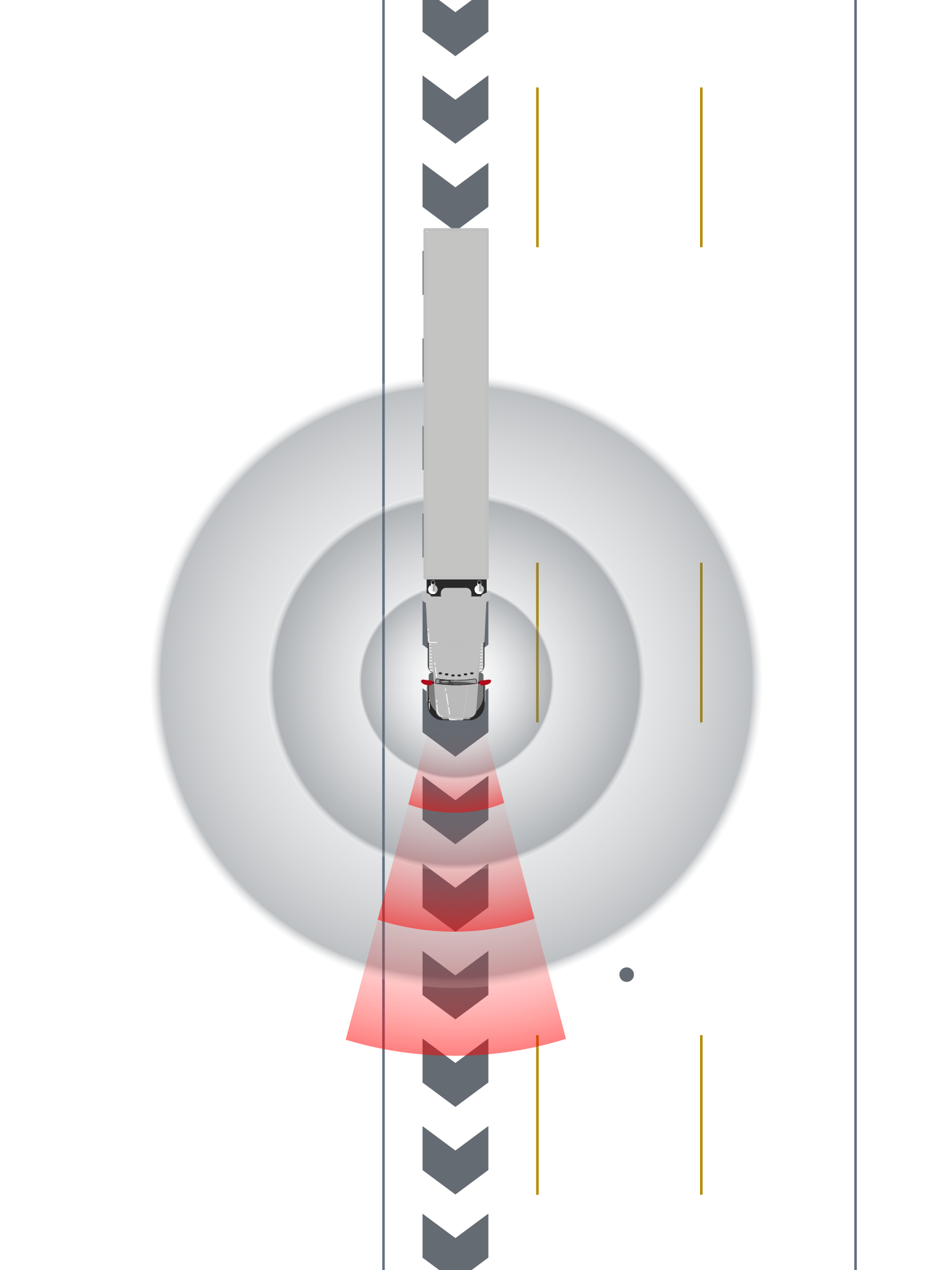
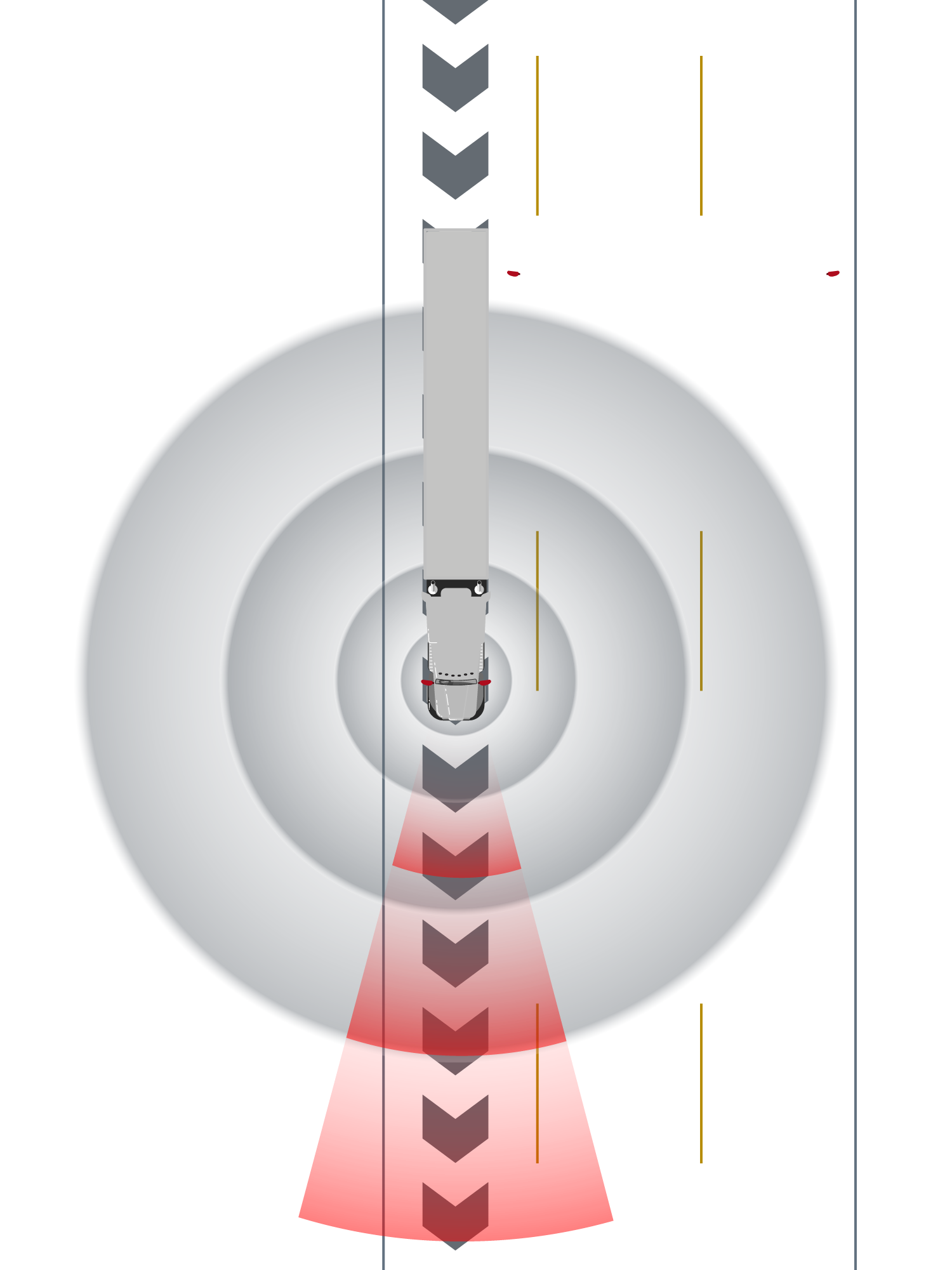
Kodiak considers its hardware and software package a driver that can be hired the same as a human truck driver. The package includes long- and mid-range cameras pointed both ahead and behind the truck, long-range, 360-degree lidar and 4D radar reaching out to 1,000 meters. The sensors feed data into an onboard computer that controls steering, acceleration, and braking.
The firm has engineered cameras and sensors into a module mounted to the truck’s sideview mirrors. The location maximizes rear-view sightlines and has low vibration. Because of the size of the cab and the length of the trailer, mounting sensors has been a challenge for companies, some of which mount lidar above the cab’s doors, cameras beneath the mirrors and centered above the windshield, and radar on the sides and front of the cab.
Wendell said the modular package solves a downtime problem should the sensor package be damaged. The modules are precalibrated in the factory and can be shipped directly to the truck’s location where the damaged module can be swapped out for the new one. The company claims it takes less time than changing a tire, he said, and eliminates the need for specialized training or having to access the roof in bad weather.
According to Wendel, the driver package checks for over 1,000 fault conditions 10 times per second while on the road. One of those is the tires. The firm has successfully demonstrated the package can autonomously slow the truck while maintaining its lane and then pull over to the shoulder after a blowout.
“This is not how humans handle a blowout,” he said. “They often swerve across two lanes and in a lot of cases they cause major accidents,” he said. “Our truck handles it extremely safely and extremely quickly. This comes back to fault monitoring.”
Kodiak also built its own mapping system that differs from standard high-definition maps used in many autonomous systems. HD maps use lasers to create a model of the world as the laser sees it, including road curves, trees, houses, buildings, and other objects. That works well for urban driving, but that degree of detail is not needed for highway driving, Wendel said.
Kodiak’s sparse maps contain just enough information on road and traffic conditions to allow autonomy and respond to conditions. Wendel said they are easier to build and maintain, and are small enough to transmit to its fleet over-the-air, keeping every truck supplied with the latest information.
Trucks can be monitored from a central location, because freight haulers want to know where their trucks are. But Kodiak’s trucks do not need any connectivity, all driving decisions are made by the onboard computer.
At the Consumer Electronics Show, Kodiak unveiled a version of its technology platform it said was ready for fully autonomous operation. The key was redundancy: The system features two separate steering actuators and three individual braking actuators. The upgrade also includes microphones that listen for sirens from emergency vehicles.
These fully autonomous trucks will be added to the company’s existing fleet of trucks, which will continue to require safety drivers. Industry partners have set up depots near Dallas, Houston, Oklahoma City, and Atlanta for receiving these trucks when they exit the highway and transferring the loads to human-driven semis for delivery to the destination.
Truck Platooning
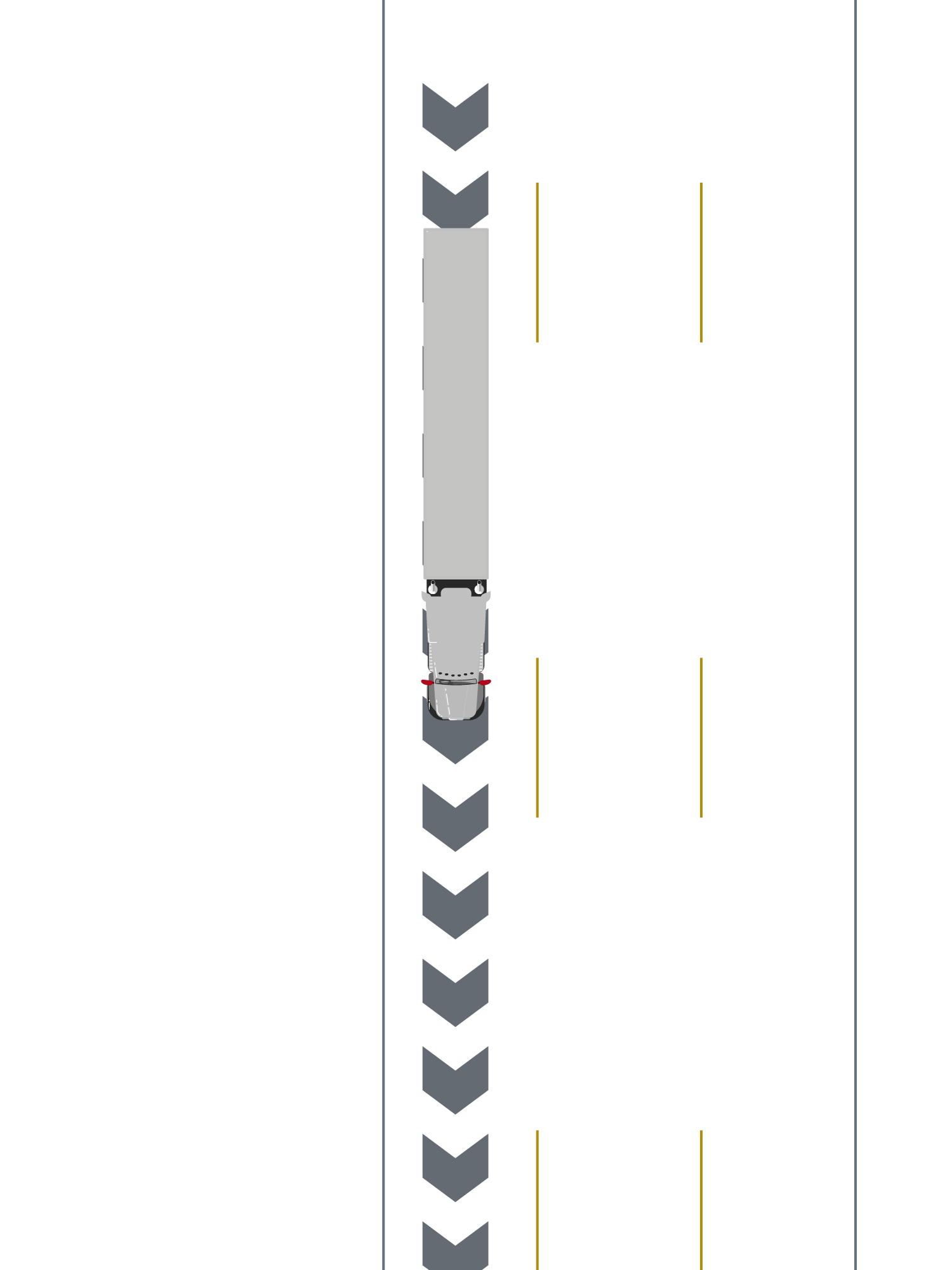
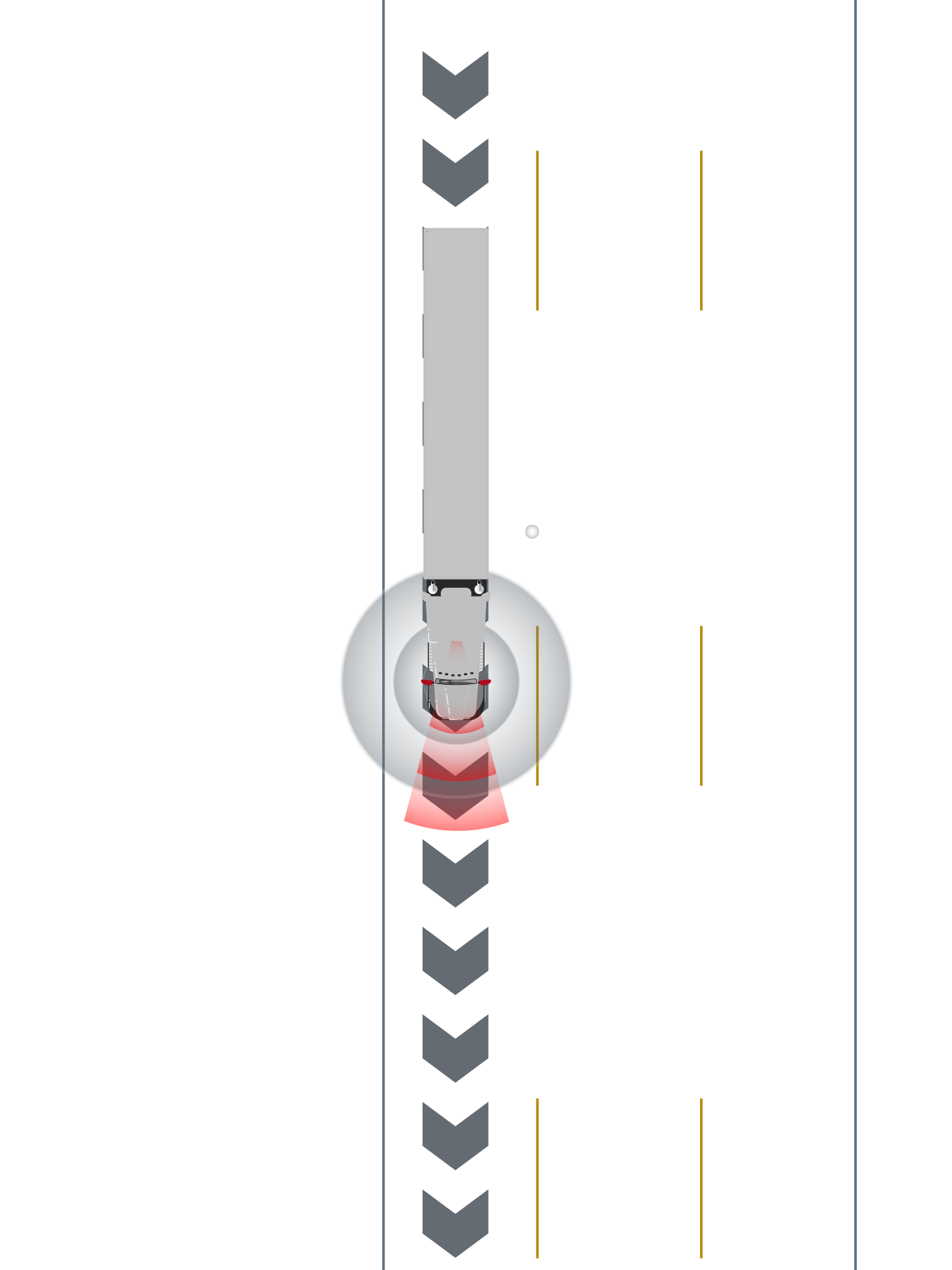
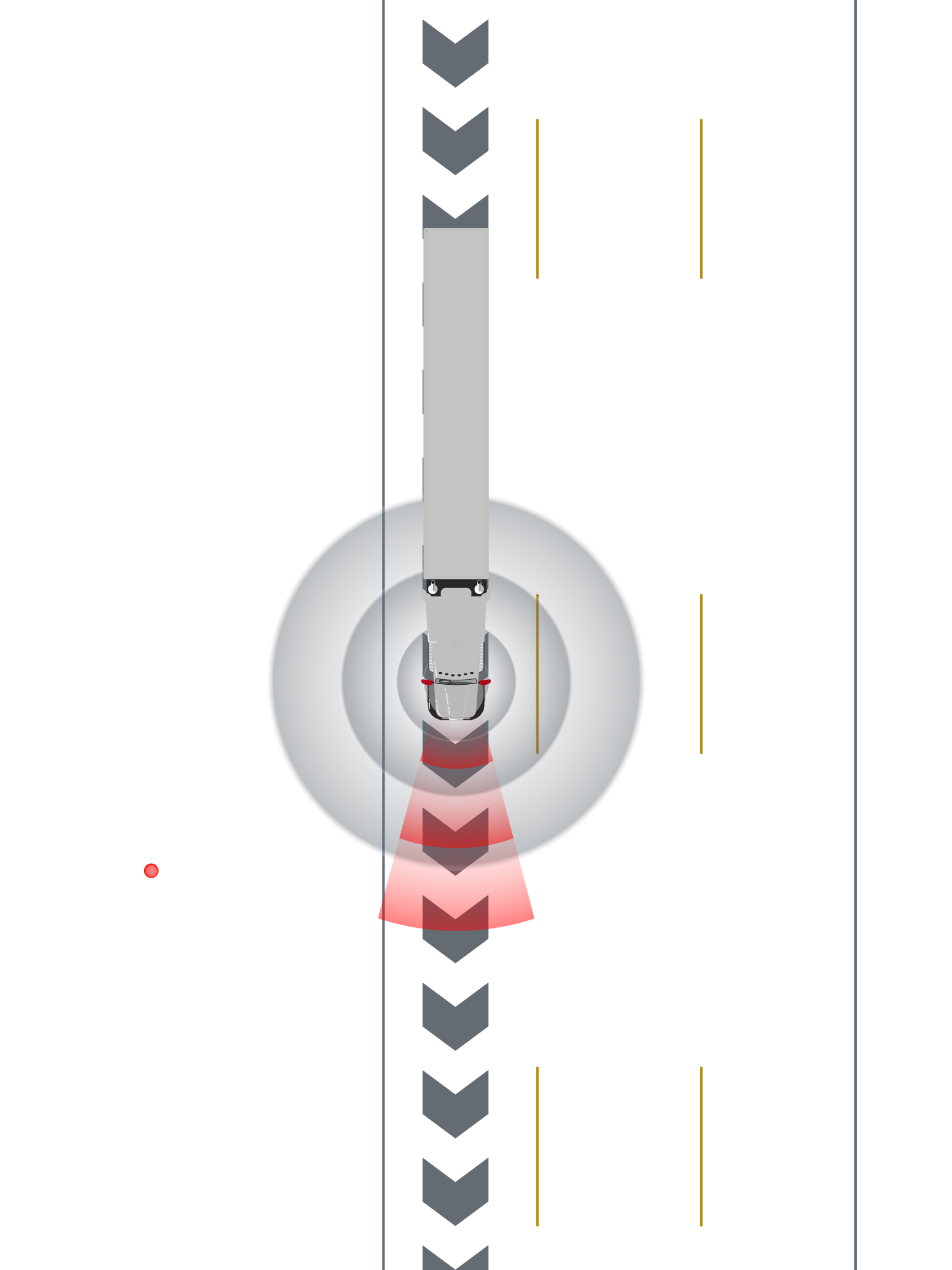
Platooning enables robotic trucks to stay in close formation to reduce wind resistance and save energy. The trucks travel at the same speed in the same lane, and if the lead truck spots an obstruction, it sends a signal to all the other trucks to slow down in unison.

1961 - The Ohio Bureau of Public Roads proposed construction of a 91-mile section of Interstate 71 between Columbus and Cincinnati that would electronically control vehicles.
2005 - Five autonomous vehicles completed the second Defense Advanced Research Projects Agency Grand Challenge self-driving vehicle competition.
2014 - The Society of Automotive Engineers unveiled the SAE Levels of Driving Automation that go from Level 0 (no driving automation) to Level 5 (full driving automation.
2018 - Starsky Robotics publicly tests an autonomous truck with an empty cabin, completing a 7-mile fully driverless trip in Florida.
2024 - Kodiak Robotics will operate fully driverless truck on route between Oklahoma City, Dallas, and Houston.
Rules for the Road
Many makers of self-driving truck technology are upfront about why they’ve chosen certain test routes: lack of regulation in those states. The United States has no single binding law or regulation in place regarding autonomous vehicles (though in 2016, the National Highway Traffic Safety Administration, an agency of the U.S. Department of Transportation, issued non-binding guidelines). And while some states such as Ohio, California, and Nevada have moved ahead with legislation, most laws are limited by design.
Developers of self-driving truck technology promise their technology will be safer than human drivers, so regulations that slow down deployment will make the roads less safe. In fact, one of the earliest proposals for automated control of vehicles—construction of a 91-mile section of Interstate 71 between Columbus and Cincinnati that would electronically control vehicles in 1961—was sold by the Ohio Bureau of Public Roads as a safety measure.
“They’re trying to make money selling technology that enhances transportation while being as safe as they can,” said David Zuby, senior vice president of vehicle research, Insurance Institute for Highway Safety’s Vehicle Research Center in Ruckersville, Va.
But events haven’t always shown that to be the case. Zuby pointed to news items regarding Cruise and Waymo AVs stopping on San Francisco roads out of confusion. Reportedly, the cars clogged up intersections, drove on sidewalks, and even tried to elude police. While testing these vehicles on public streets provides valuable, real-life data for the companies deploying them, it comes at the cost of inconveniencing or even endangering the wider public when the test vehicles fail.
The disruptions and public questioning of the safety of fully autonomous vehicles prompted General Motors, the parent of Cruise, to pull its robotaxis off the streets indefinitely.
The question of liability for the disruptions, accidents, and even injuries caused by autonomous vehicles in testing is still unsettled.
Marc Tancer, a self-described libertarian activist based in Palm Beach County, Fla., makes the distinction between testing in public versus developing AVs on privately owned and managed roadways. “There are already self-driving vehicles being used at airports and mining operations, for example. But public highways complicate things.”
On private property, liability is clearcut, Tancer said. “If a self-driving car hurt someone, the owner of the vehicle is responsible,” he explained. From the libertarian perspective, Tancer said, that concept should be carried over to testing on public roads.
Tancer said subjecting companies deploying self-driving trucks to strict liability in the case of accident would provide greater safety and benefit to the public than placing mandates and prohibitions on AVs.
That’s not a universally held opinion.
“I don’t agree,” Zuby said. “In fact, it can be argued the complete opposite.” Zuby explained that requirements to achieve safer vehicles will spur innovations on how to achieve safety outcomes.
One situation that Zuby says is “bizarre” is that governments at every level—local, state, and federal—don’t mandate automated driving systems like self-driving trucks to obey the current traffic laws. Makers argue nuance-needed exemptions.
“As long as they can convince the regulators that the system is safe to operate, then exemption is probably warranted and not a cause for concern,” he said. “But it’s not always clear whether or not they are providing the regulators with adequate safety information to make a determination about whether or not to grant an exemption.”
Up to now, no federal or state entity has been willing to impose requirements of any kind on the conditions for which these self-driving trucks and other AVs can operate on public roads in experimental mode. Wanting to attract technology companies to bring jobs to their states, officials would rather showcase their partnerships with innovators.
In 2015, for example, the state of Nevada presented Daimler’s Freightliner Inspiration truck an AU (autonomous vehicle) plate “010,” which gave it permission to operate on state public roads. Pre-pandemic, the U.S. Department of Transportation went so far as to announce efforts to remove “unnecessary and unintended” regulations for AV innovators and react quicker to requests for exemptions from federal requirements.
While the goal of on-road testing is to improve the performance of AVs, the mistakes made by these “student drivers” can have fatal consequences. One tragic example of testing gone wrong was a 2018 incident where a self-driving Uber with an emergency backup driver behind the wheel struck and killed a pedestrian in Tempe, Ariz., where the company had deployed AVs.
The Uber vehicle that was “out gaining miles to help improve the Uber self-driver, and it ran over a pedestrian—a lady crossing the street,” Zuby said. In his view, if companies can’t come up with adequate operational safeguards, states and even local jurisdictions should be able to impose such rules and regulations to make sure that the companies perform in a safe way. “Technology may fail, but where are the backups for when technology is unsuccessful? How do they make sure that nobody gets hurt?”
Up to now, that has been a theoretical question in most places. But as motorists face the prospect of large trucks barreling down the highway with no one behind the wheel, the reliability of self-driving technology and its built-in margin for safety will likely become something every human driver will think about.



Still chasing ROI
Perhaps the biggest barrier to widespread deployment of self-driving trucks isn’t technology or regulation. It’s economics: It’s still unclear what the ROI is for some of these solutions, as the industry is still investing in the technology and systems.
“If you consider limited deployments, yeah, we’re going to see more and more of that over the next couple of years,” MIT’s Reimer said. “If you’re thinking about widescale deployments, beginning to make a substantive impact on the driver population of today, another 10 to 20 years. Widescale deployment, probably longer. The more defined the operational demand of the environment you’re trying to operate in, the easier it is. But the harder it is to generate and justify the ROI.”


Safety must be a factor as well, but the question remains: How safe is safe enough?
“No one knows. No one’s defined that. The technology is probably nowhere near developed enough to deploy at scale in the way we want from an economical perspective,” Reimer said. “The cost of the technology is high, but the value point that it’s providing is not—replacing the truck driver has significant value, but at what cost?”
AVs will require decades of investment for highly automated, safe, reliable autonomy, Reimer said.
“One of the reasons it’s technically so difficult is that humans are really, at the end of the day, really good at making decisions in the gray zone,” Reimer said. “It’s not a black and white decision here. Road lines aren’t so well painted, infrastructure is not maintained, these are all very difficult topics that require systems-level investments as opposed to just purely the technology alone.”
Developing a technology that is both better and cheaper than a human driver will take longer than most technologists have suggested, Reimer said. Truck drivers don’t have to worry about their jobs in the near term.
“The long-term promise is huge. The pathway to get there is much longer than everybody would like it,” Reimer said. “We’re talking iterative pieces of the very, very complex and long system change that’s required to support the infrastructure we really want.”
Louise Poirier is senior editor at Mechanical Engineering magazine. Cathy Cecere is ASME’s Membership Content Program Manager. John Kosowatz is a freelance writer in Maplewood, N.J.
 Built with Shorthand